
What are CS Nodes?
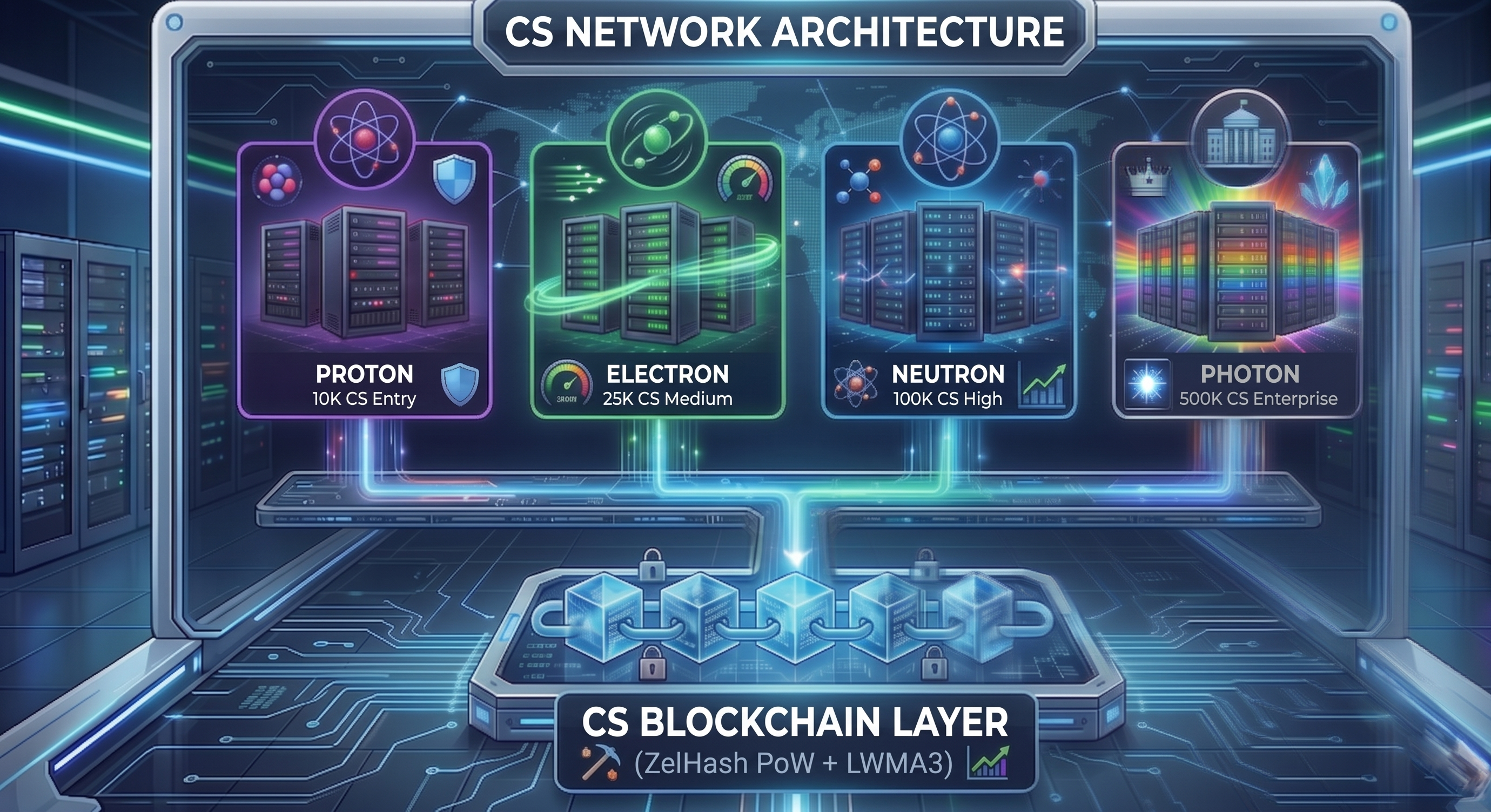
CS Nodes are the decentralized servers that power the Cloud Service network. They form the backbone of the infrastructure, enabling decentralized cloud computing, validating transactions, and earning CS rewards in return.
What do CS Nodes do?
Every CS Node runs the full Cloud Service daemon (csd) and participates in the network by:
- Validating transactions — verifying every transaction on the blockchain
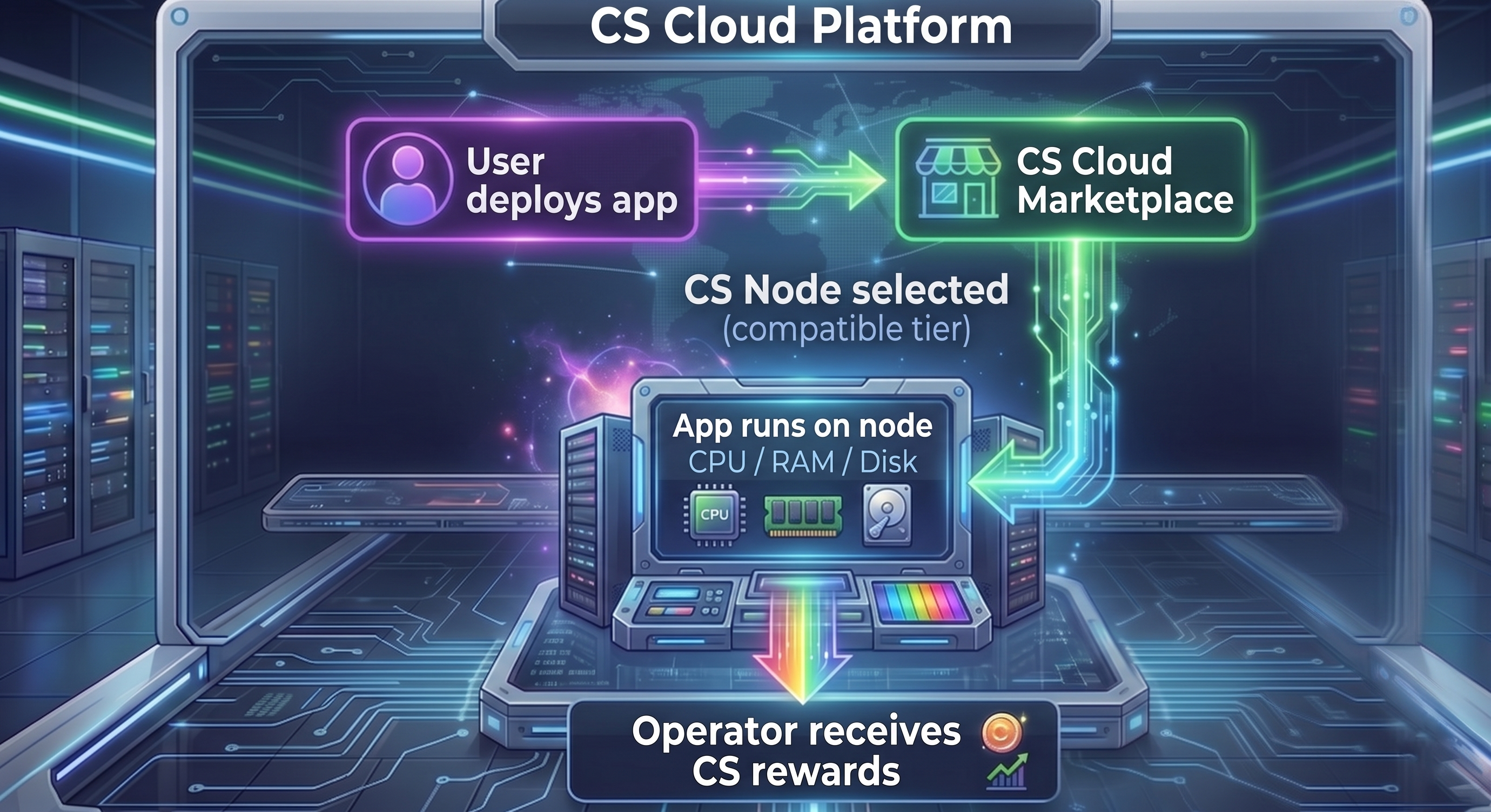
- Hosting decentralized applications — providing computing resources through CS Cloud
- Contributing hardware — offering CPU, RAM, and storage to the network
- Earning rewards — receiving a share of every block reward, proportional to tier
Role in the Network
CS Nodes are not just full blockchain nodes. They are the building blocks of CS Cloud — the decentralized cloud computing platform built on top of the Cloud Service blockchain.
Node Tiers at a Glance
CS Nodes are organized into 4 performance tiers. Each tier requires locking a fixed collateral amount in a dedicated wallet and meeting the hardware minimums verified by the benchmark daemon (csbenchd).
| Tier | Collateral | vCPU | RAM | GPU | Storage | Block Reward Share |
|---|---|---|---|---|---|---|
| PROTON | 10,000 CS | 4 | 8 GB | — | 220 GB SSD | 5% |
| ELETRON | 25,000 CS | 8 | 30 GB | — | 440 GB SSD | 10% |
| NEUTRON | 100,000 CS | 16 | 61 GB | — | 880 GB SSD | 20% |
| FOTON | 500,000 CS | 32+ | 122+ GB | 24+ GB | 1760+ GB SSD | 40% |
Why Run a CS Node?
Running a CS Node gives you:
- Passive CS income — every block (every ~2 minutes) rewards each active node in your tier
- Network ownership — you become part of the decentralized infrastructure
- CS Cloud revenue — nodes hosting applications earn additional income from user payments
- Participation in governance — nodes are the heart of the network's long-term direction
Node Software Stack
Each CS Node runs:
| Component | Binary / Package | Port (localhost) |
|---|---|---|
| Cloud Service Daemon | csd | 26124 (RPC) |
| P2P Network | csd | 26125 (public) |
| Benchmark Daemon | csbenchd | 26225 |
| CS Mage Panel | cs-mage | 8080 |
RPC port 26124 must never be publicly exposed. Only the P2P port 26125 should be accessible from the internet.
How Nodes Earn Rewards
The Cloud Service block reward is split across 5 categories every block:
┌─────────────────────────────────────────────────────────────┐
│               Block Reward Distribution (150 CS)             │
├─────────────────────────────────────────────────────────────┤
│                                                             │
│  Miners    ████████████░░░░░░░░░░░░░░░░░░░░  25%  37.5 CS  │
│  PROTON    ██░░░░░░░░░░░░░░░░░░░░░░░░░░░░░░   5%   7.5 CS  │
│  ELETRON   ████░░░░░░░░░░░░░░░░░░░░░░░░░░░░  10%  15.0 CS  │
│  NEUTRON   ████████░░░░░░░░░░░░░░░░░░░░░░░░  20%  30.0 CS  │
│  FOTON     ████████████████░░░░░░░░░░░░░░░░  40%  60.0 CS  │
│                                                             │
└─────────────────────────────────────────────────────────────┘
Each tier's share is distributed equally among all active nodes of that tier. More nodes in a tier means smaller individual rewards per node.
Collateral & Security
To activate a CS Node, you lock the required collateral in a specific unspent transaction output (UTXO). This collateral:
- Remains under your full control at all times
- Is never sent to a smart contract or custodian
- Must have at least 100 block confirmations before the node activates
- Can be unlocked at any time (deactivates the node)
Next Steps
- Tier Requirements & Hardware — Detailed specs per tier
- Rewards & Halving Schedule — How rewards work over time
- Setting Up a CS Node — Step-by-step setup guide